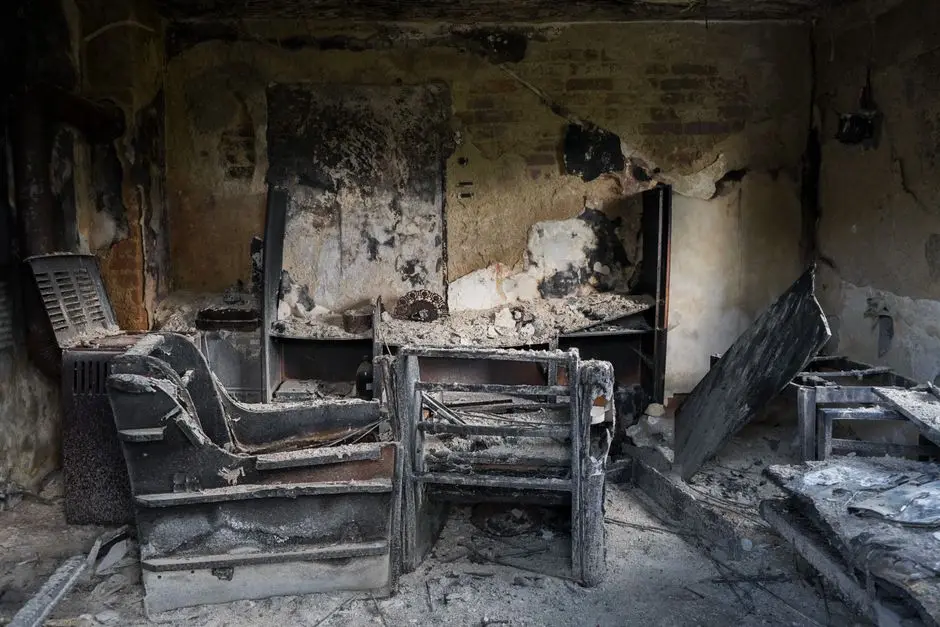
Your house still smells like smoke after a fire because the odor is not in the air - it is soaked into the materials around you. Smoke particles are smaller than a human hair and they lodge in drywall, wood, fabric, insulation, and ductwork, then release that smell every time the temperature or humidity changes. Clearing it means removing the source, not masking it.
Below we walk through why smoke smell lingers after fire in WHITEWATER, how long it realistically lasts, what actually works, and when it is time to bring in a crew. We do this work every week in homes and rentals across the area, and the pattern is almost always the same.
Why does my house still smell like smoke after a fire in WHITEWATER CA
Smoke smell in house after fire WHITEWATER cases comes down to porous surfaces holding combustion residue that keeps off-gassing. When a fire burns, it produces three things that matter here: soot (carbon particles), volatile organic compounds (VOCs), and moisture. The soot sticks to walls and ceilings. The VOCs soak into anything porous. The moisture pushes both deeper into the material.
That is why a room can look clean and still smell like a campfire. The visible soot is only the top layer. The real problem is the residue you cannot see, sitting a quarter-inch into the drywall or inside the padding of your couch.
Smoke odor removal WHITEWATER CA is a category of restoration work that removes combustion residue from surfaces, contents, and air-handling systems so the smell stops regenerating. It is not cleaning in the usual sense - it is source removal followed by odor neutralization.
Three local factors make this worse in WHITEWATER than people expect. First, the housing stock: a lot of homes near Fire Damage Restoration in Downtown Whitewater date to the early 1900s, and old plaster and horsehair insulation hold odor far longer than modern drywall. Second, our winters: when the furnace kicks on in November, warm air pulls trapped smoke compounds out of walls and pushes them through every room. Third, humidity swings off the lakes - Cravath Lakefront and Bowers Lake both sit close enough that summer moisture re-activates residue that seemed gone in February.
The three places smoke hides and keeps the smell alive
Residual smoke odor WHITEWATER, California homeowners complain about almost always traces back to one of three reservoirs. Find them and you find the smell.
1. Porous building materials
Drywall paper, unfinished wood studs, ceiling tile, carpet, carpet pad, and insulation act like sponges. A kitchen fire that lasts four minutes can push smoke through an entire floor if the HVAC was running. Once residue is inside the pad, no amount of surface cleaning touches it. This is why we pull carpet and pad in the affected rooms on most jobs - leaving them in place is the single most common reason a house still smells like smoke WHITEWATER CA weeks later.
2. The HVAC system and ductwork
If the air handler was running during the fire, smoke got pulled into the return and coated the inside of the ducts. Every time the system runs, it redistributes that odor. Duct cleaning alone is not enough - the residue has to be chemically neutralized, not just vacuumed. We see this constantly in Fire Damage Restoration in University of Wisconsin-Whitewater Area rentals, where older forced-air systems share ductwork between units.
3. Contents and soft goods
Upholstery, mattresses, curtains, clothing, books, and cardboard boxes all absorb VOCs. A single smoke-damaged mattress can keep a bedroom smelling for months. Some contents can be saved with proper treatment; some cannot, and pretending otherwise wastes your money.
How long does smoke smell last after a fire in WHITEWATER, California
Smoke smell lasts two weeks to six months in a typical WHITEWATER home if the source is not removed, and it can return a year later when the heat comes on. There is no fixed clock - it depends on how long the fire burned, what burned (protein fires from kitchen grease are far worse than paper fires), and how much porous material was exposed.
Here is a realistic breakdown of what we see:
- Small, contained fire, quick cleanup: 7-14 days with proper ventilation and surface cleaning.
- Room-and-contents fire with HVAC exposure: 4-10 weeks if ducts and soft goods are treated.
- Fire that burned through drywall or into the attic: 3-6 months, and often requires removing and replacing materials.
- Untreated: the smell can persist for years and reappear seasonally.
The reappearing part catches people off guard. A house that smelled fine in July can smell like smoke again in December, because the furnace raises the temperature of the walls and releases compounds that were dormant. If you have already had the visible damage repaired, the odor source is still in the structure - that is exactly the situation our smoke odor removal WHITEWATER CA crew handles most often.
Common mistakes that make residual smoke odor worse
Most of the failed DIY attempts we get called to fix share the same handful of mistakes. Avoid these and you save yourself a second round of damage.
- Painting over soot. Paint traps residue against the wall. Within a few weeks the smell comes through the paint, and now the drywall has to be replaced instead of cleaned.
- Running the HVAC to "air it out." If the ducts are contaminated, you are spreading the problem to every room in the house.
- Using ozone generators in occupied spaces. Ozone works on some odors, but it is a health hazard to breathe and it does not remove the source. It masks.
- Bleach on soot. Bleach does not dissolve carbon residue, and on some surfaces it sets the stain.
- Throwing away soft goods too early - or keeping them too long. Some items are salvageable with the right treatment. Others will never stop smelling. Guessing wrong costs money either way.
One more: waiting. Every week that residue sits, it bonds tighter to the surface. A job that would have been a two-day fire damage clean up WHITEWATER CA becomes a reconstruction project.
How to get rid of smoke smell after fire WHITEWATER, California
Getting rid of smoke smell after a fire in WHITEWATER, California follows a sequence. Skip a step and the smell comes back.
Step 1: Stop the air movement
Turn off the HVAC and close the registers in affected rooms. You want to contain the residue, not circulate it.
Step 2: Remove loose soot - dry first
Soot has to come off dry before any liquid touches it. Wet-wiping loose soot just smears carbon into the drywall. We use HEPA vacuums with soft brushes, working top-down so residue does not fall onto cleaned surfaces. This is the core of soot removal WHITEWATER CA and it is the step most homeowners rush.
Step 3: Clean and neutralize surfaces
After dry removal, surfaces get treated with a degreaser for protein residue (kitchen fires) or a carbon-specific cleaner for synthetic fires. Then a neutralizing agent goes on to break down the VOCs. This is not the same as disinfecting - you are chemically altering the residue so it stops off-gassing.
Step 4: Treat contents and soft goods
Textiles get evaluated one by one. Washable items go through a specialized wash cycle. Upholstery and mattresses get treated in place or sent out. Items that cannot be saved get documented and removed - leaving them in the house contaminates everything around them.
Step 5: Address the HVAC
Ducts get cleaned and the interior surfaces treated. The air handler and coil get cleaned separately. Skipping this step is the number one reason a house still smells like smoke WHITEWATER CA after a professional cleaning.
Step 6: Seal remaining porous surfaces
Studs, subfloor, and framing that cannot be removed get sealed with a shellac-based primer. This locks in any residue the cleaning could not reach. It is standard practice on every fire and smoke damage restoration WHITEWATER CA job where framing was exposed.
Step 7: Verify with air testing
Before we call a job done, we run an air quality check and do a smell test with the HVAC running. If the smell is still there with heat on, the job is not done.
When to call a professional for smoke smell removal WHITEWATER CA
Call a professional when the smell has lasted more than two weeks, when the HVAC was running during the fire, or when the fire involved any porous material you cannot remove yourself. Those three conditions mean the residue is in the structure, not on the surface.
Our team at Fire Damage Restoration Whitewater handles the full sequence - soot removal, surface neutralization, duct treatment, content evaluation, and sealing - so you are not coordinating three different contractors. We work in homes, rentals, and commercial spaces across the area, and we tell you upfront what can be saved and what cannot.
If you are not sure whether your situation needs a full crew or just a targeted treatment, we will look at it and give you a straight answer. No pressure, no upsell.
Frequently Asked Questions
Why does my house still smell like smoke after a fire in WHITEWATER CA?
Because combustion residue is trapped in porous materials - drywall, insulation, carpet pad, upholstery, and ductwork - and keeps releasing odor as temperature and humidity change. Surface cleaning does not reach it. The source has to be removed or chemically neutralized.
How long does smoke smell last after a fire in WHITEWATER, California?
Two weeks to six months in most homes if the source is not removed, and it can return seasonally for years. Small contained fires clear in 7-14 days with proper treatment. Fires that reached the attic or ran through the HVAC take 3-6 months.
How do I remove smoke odor from my house in WHITEWATER CA?
Turn off the HVAC, vacuum loose soot dry with a HEPA filter, clean and neutralize every hard surface, treat or remove soft goods, clean the ducts, seal exposed framing, then verify with the heat running. Skipping the duct and seal steps is why most DIY attempts fail.
Who can remove smoke smell from my house in WHITEWATER?
A restoration company that handles soot removal, odor neutralization, duct cleaning, and content treatment as one job. Fire Damage Restoration Whitewater does all four, and we verify the result with the HVAC running before we leave.
Does homeowners insurance cover smoke odor removal?
Most policies cover odor remediation as part of a covered fire claim, including duct cleaning and content treatment. Document everything before you throw anything away, and get the scope in writing from the restoration company so the adjuster can approve it.
Get help with Fire Damage Restoration in WHITEWATER
If your house still smells like smoke and the source has not been found, we can trace it and clear it. Call Fire Damage Restoration Whitewater at (833) 929-6186 and we will schedule a walkthrough.